
Are you failing to get your website noticed by the search engines? Do you wonder how to make your content different from others in the already flooded digital space? The answer lies in On Page SEO, considered a critical component that ensures that your site attracts visitors and keeps them engaged.
In today’s highly competitive online world, a pretty website is no longer enough. Other search engines like Google are constantly evolving with their ranking algorithms. If you don’t optimize your content, structure, and technical elements on your pages, there is a gigantic opportunity in missing reaching your audience.
Take this step-by-step guide to the fundamentals of On-Page SEO in 2024. We’ll dive into the on-page SEO factors that impact rankings and tackle actionable techniques you can apply immediately. An introductory guide in a hyper-complex SEO landscape, ideal for newcomers who require a clear roadmap to amplify the visibility of their website, plus refine existing skills.
Get ready to transform your website into an SEO powerhouse. Well, let’s just get down to it.
What is On-Page SEO?
Definition of On-Page SEO
On-page SEO is the process of optimizing any feature on your website to enhance their visibility on search engines. All these processes occur directly on your site and are designed to allow the search engine to gain a better understanding about what is on it so that it can then easily index and rank the pages appropriately.
Why On-Page SEO Matters in 2024
At a time when it has never been more important, the requirement to keep track of the latest SEO trends has skyrocketed in the present scenario where Google is constantly updating its algorithms.
It helps search engines better understand your site and enhances UX, which is one of the prime ranking factors in 2024. Those pages that are well optimized rank higher and draw more organic traffic.
Key Elements of On-Page SEO
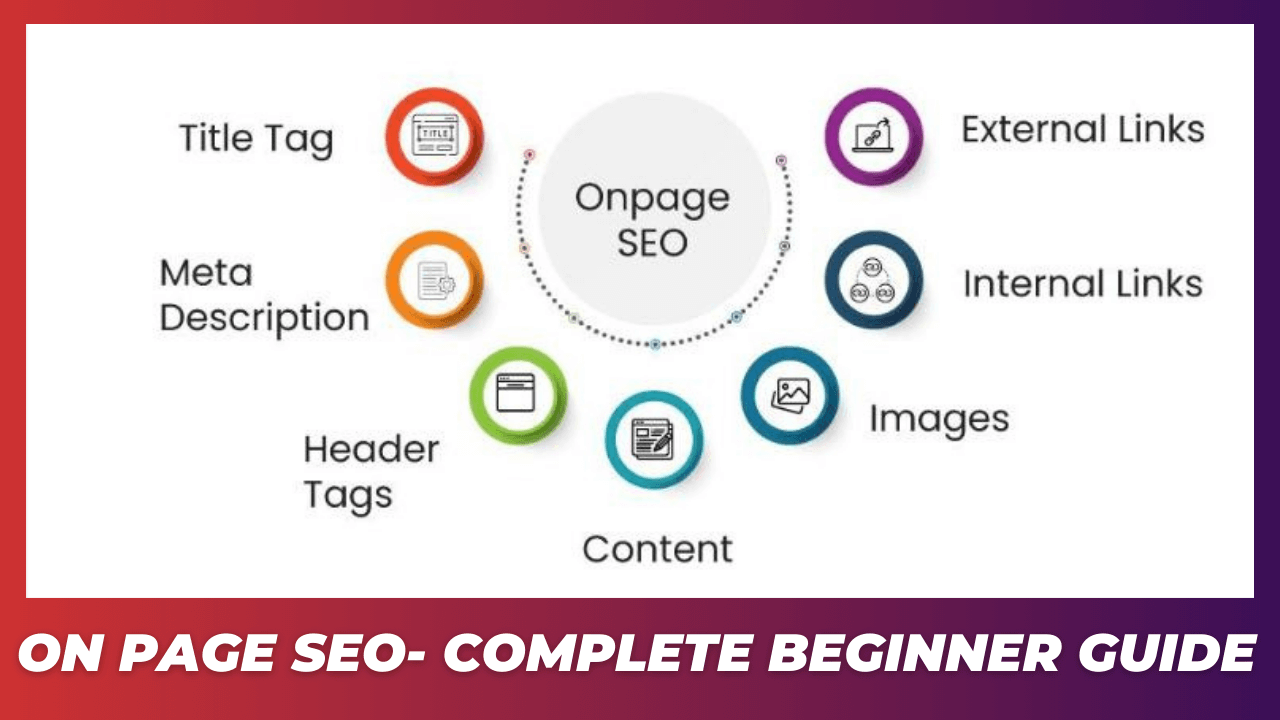
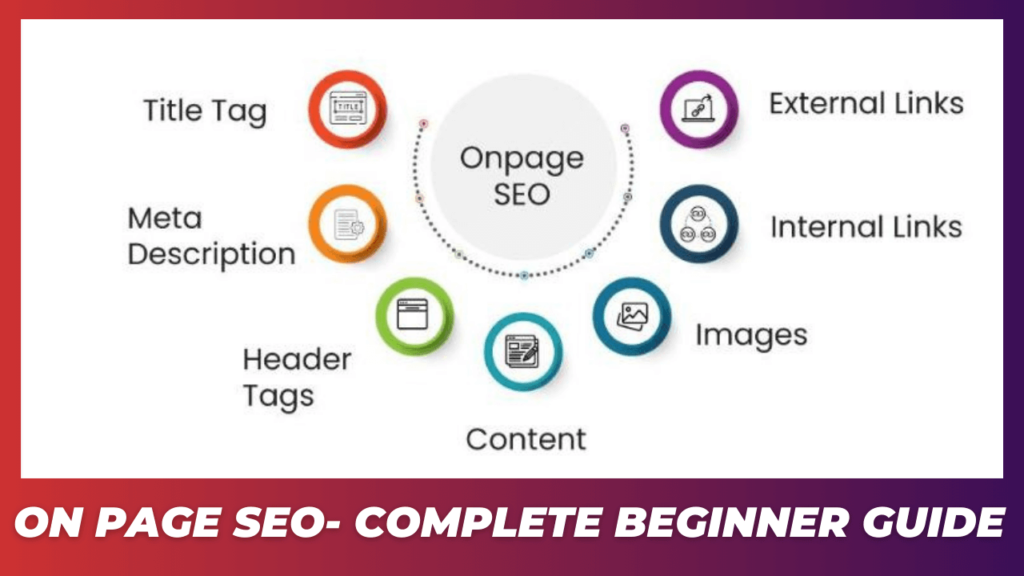
Title Tags
Your title tag is probably one of the most important on-page SEO factors. It is nothing but the headline that can be clicked in the search results. You have to add your primary keyword to the title tag and make it compelling as well as less than 60 characters for better ranking and user engagement.
Meta Descriptions
Meta descriptions are the little blurbs that show up under your title in search engines. They do not have a direct impact on ranking but highly impact click-through rates. Target 150-160 characters, and use a good call to action.
Headers (H1, H2, H3, etc.)
Headers organize your content, making it easier for both users and search engines to understand. Use H1 as the main title of the page and break content into sections using H2, H3 and beyond. The search engines apply them to understand the structure and hierarchy of your content.
URL Structure
The URLs should be short, descriptive, and include the target keyword. Avoid long, hard-to-read strings of numbers or symbols. Clean, readable URLs are both good for both SEO and users.
Internal Linking
Internal links can help guide users to related content on your site, thereby increasing time-on-page and session duration—two key engagement metrics for SEO. It also helps distribute link equity across pages, making the whole site easier for search engines to crawl.
External Linking
Linking to other authoritative sources makes your page credible. This is primarily because the search engine sees that you are offering valuable content supported by credible sources.

Optimizing Content for On-Page SEO
Keyword Research and Placement
First, do some keyword research to find out what terms are being searched for by your audience. When you have these keywords, simply write naturally with them. Then do not stuff the keywords too-could be penalized by search engines, which are smart enough to penalize pages if they try to cheat the system.
LSI (Latent Semantic Indexing) Keywords
LSI keywords are secondary phrases and words, which the search engine picks up to understand the context of the content. Incorporating them helps to create a full picture for both the users and the search engines and increases the chances for ranking on a variety of queries.
Content Quality and Readability
Importance of Unique, Valuable Content
Search engines reward the content that brings some value. Whether one is writing a blog post or a product description, their aim should be to answer questions, solve problems, or even entertain. The higher the value your content possesses, the higher its possibility of attracting links and social shares and boosting the SEO.
The Role of User Intent in Content Optimization
Understanding what a user intends to do with their search can be useful to create focused, purposeful, and timely content. Align your content with the intent of your users to get ranked and really drive engagement.
The Role of Multimedia in On-Page SEO
Images and Alt Text Optimization
Images, for example, can’t be seen by search engines; you need to provide them with alt text-descriptions describing what’s shown on the image. That, apart from improving accessibility for users who are blind or have low vision, certainly helps with SEO.
Videos and Other Embedded Content
Video and interactive content can go a long way in increasing the user engagement on a page. Video can increase the time spent by a user on a particular page in your website, which is considered as a positive signal by the search engine.
Interactive Elements
Other features, like quizzes, calculators, or even comment sections, promote user interaction, which is another way of promoting your SEO.
Mobile Optimization
Mobile-Friendly Design
Currently, more than half of all internet traffic is mobile-based. The demand for a mobile-friendly design can no longer be ignored. That is to say, make sure that your website is mobile-friendly, responding easily to variations in screen sizes.
Page Load Speed on Mobile
Mobile users expect a quick response. Pages that load for too long will most probably lead to a high bounce rate. Compression of images and minification of code can cause an extraordinary boom in the load time.
Mobile SEO Best Practices for 2024
Google will remain biased towards mobile-first indexing in 2024. So make sure your mobile version is not inferior in terms of content and technical implementation as well to the desktop version.

Improving User Experience (UX) for SEO
Core Web Vitals
Core Web Vitals, Google introduced, measure essentially the pace of and responsiveness as well as visual stability of your site. These optimizations, therefore, can improve both rankings and user experience.
Navigability and Layout
A clean, well-organized easy-to-navigate site encourages users to stay on there for a longer time, even checking out more pages. Make sure menus, links and buttons are intuitive.
Engagement Metrics (Bounce Rate, Time on Page, etc.)
Search engines track user interaction with your website. Hence, a high bounce rate and short sessions might indicate that the Google search which accessed it was not what its visitors were searching for at that time.
Site Speed and Its Impact on SEO
How Site Speed Affects Rankings
The worst thing about a slow site is that it frustrates your users and affects your search rankings because Google considers page speed as a ranking factor, especially for mobile searches.
Tools for Testing and Improving Speed
There are numerous tools you can use to test and improve your site’s speed, such as Google PageSpeed Insights, GTmetrix, and Pingdom. These tools can actually pinpoint areas that need improvement so that you could compress images or reduce server response times.
Structured Data and Schema Markup
What is Structured Data?
Structured data is the code on your website that helps the search engines understand you better. Getting rich snippets for reviews, FAQs, or information about a product in the search results is of importance.
How Schema Markup Enhances SEO
Schema markup makes your listings much informative and adds to your CTR. This will also make your content appear in the featured snippet, which could drastically increase visibility.
Types of Schema Markup to Use
Some of the most common schema types are local business schema, FAQ schema, and product schema. This upgrades the way your content is represented in search results.

Image SEO: Best Practices
Importance of Image Compression
Very large image files may cause your page to slow, which is very bad for SEO. Always compress images without losing quality, which will speed up your load times.
Image File Names and Descriptions
Before you upload an image, rename the file with a keyword that has something to do with the photo. Instead of “IMG_1234.jpg,” you might use “SEO-tips-2024.jpg”.
Alt Text and Its Impact on Accessibility and SEO
Image Alt text improves search engine ranking but also increases accessibility. Thus, if you have a visual impairment, you could still understand what the image represents.
SEO for Local Search
Optimizing for Local Keywords
If you have a local business, you can use local terms in your keywords, for example, “best coffee shop in New York.” This makes sure you come up in location-based searches.
NAP (Name, Address, Phone Number) Consistency
Your business’s NAP information must be consistent on your site and Google My Business as well as other online directories. Inconsistent information can confuse both the users and search engines.
Local Business Schema
Local business schema can help you come up in the local search result, which means Google Maps and the local pack.

Common On-Page SEO Mistakes to Avoid
Overstuffing Keywords
Keyword spamming is actually the opposite-a content filled with too many keywords looks unnatural and spammy. The keyword itself is a quality rather than a quantity, in cases of keyword placement.
Ignoring Meta Tags
Many beginners skip on the meta tags, such as title and description, but these are very important for search engine optimization. Always fill them out thoughtfully.
Slow Page Load Times
Probably the easiest way to lose a visitor is through a slow website. Although it makes all the difference to your users, even mere seconds in distinctions regarding user engagement or ranking parameters for SERPs.
The Future of On-Page SEO in 2024
AI and Automation in SEO
AI is revolutionizing SEO by helping create content, analyze data, and even predict search trends. It’s now helping businesses streamline their processes on SEO by applying tools like ChatGPT.
Voice Search and Its Growing Importance
Optimization for voice assistants like Alexa and Google Home is increasingly becoming vital with the boom of voice assistants. Target those conversational long-tail keywords that more clearly speak like a human.
New Google Algorithm Updates to Watch
Stay updated on the latest algorithm change from Google. Google never stops finding ways to rank content; therefore, if you are cognizant of where they’re headed, you’ll be on the curve.
Conclusion
As you can see, mastering the on-page SEO is not so scary after all. Focusing on the right on-page SEO factors-from keyword research to page-structure optimization-gives you a noticeable difference in how search engines and users interact with your site.
This is one of the beauties of On Page SEO techniques because content falls under your control. You can now work to improve your rankings, enhance user experience, and drive more targeted traffic towards your website. But which one would you start with: keywords optimization, refines headings, or page load speed?
Remember that SEO is a continuous effort, not something you do once. An on-page SEO checker helps you track your efforts and stay on the right track. Stay consistent, updated, and on top of things, and most importantly, keep focused on providing value to your audience.
All improvements in rankings today aren’t just boosting your search rankings but also solid bases for long-term success. So, next step: let your site be the SEO powerhouse it was born to be.

FAQs
How often should I update my on-page SEO?
It’s good practice to review your on-page SEO every 3-6 months, especially after major Google updates.
Can on-page SEO alone improve my rankings?
On-page SEO is crucial, but it works best when combined with off-page strategies like backlink building and social media engagement.
Is keyword density still important in 2024?
While it’s important to include your main keyword, focus more on content quality and user intent rather than a specific keyword density.
What tools are best for on-page SEO optimization?
Some popular tools include Yoast SEO, SEMrush, Ahrefs, and Google Search Console.
How does on-page SEO differ from off-page SEO?
On-page SEO involves optimizing elements directly on your site, while off-page SEO refers to external factors like backlinks and social media signals.