
If you’ve been exploring SEO, you’ve probably come across “E-E-A-T.” But what does it mean, and why should you care more about your website’s presence in the search results?
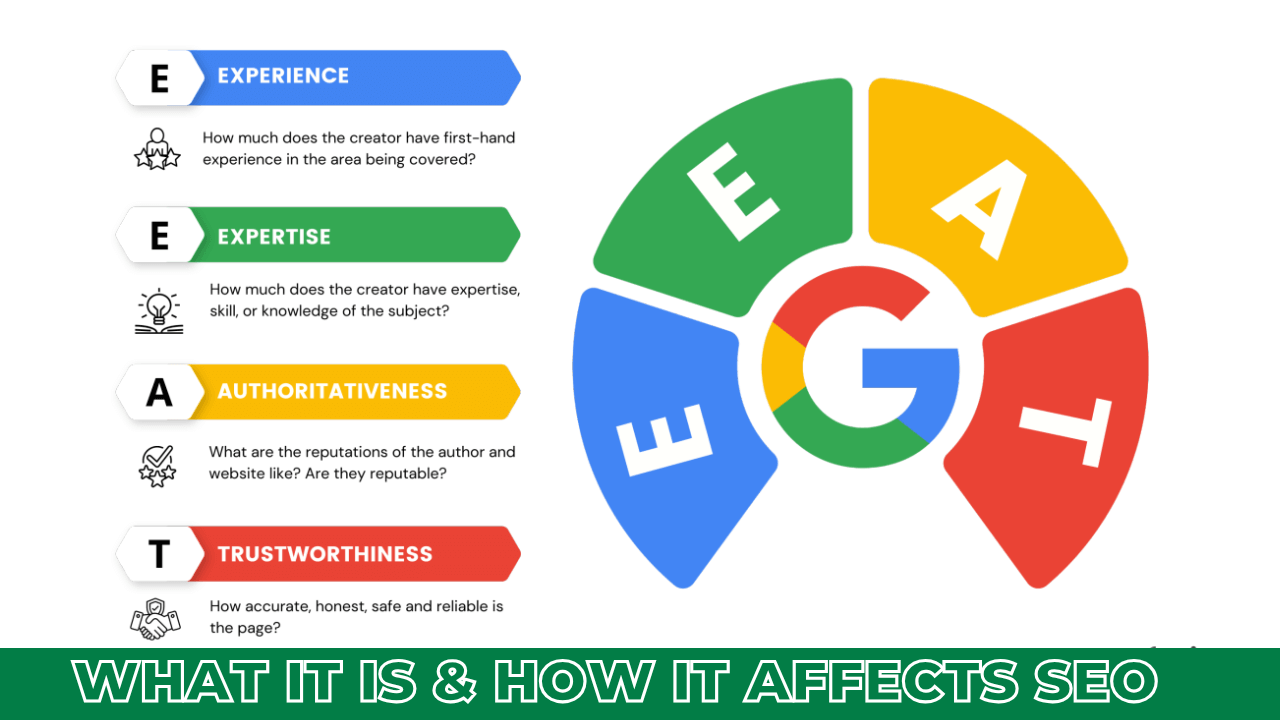
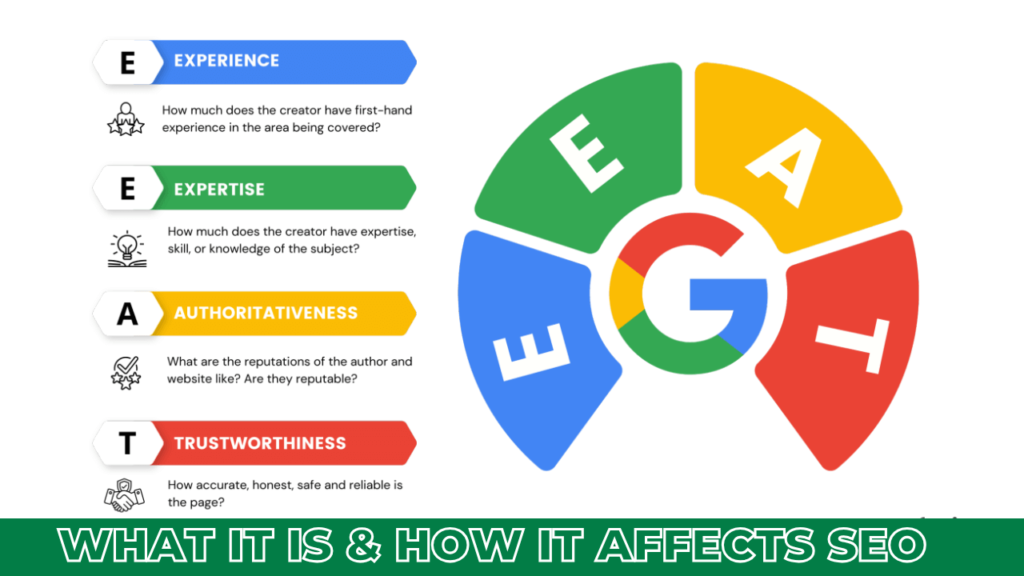
E-E-A-T is an acronym for Experience, Expertise, Authoritativeness, and Trustworthiness.
These are all exactly the factors Google considers while ranking websites. Here is a breakdown of each element of E-E-A-T, why you should care about it, and what you should do about it.
Let’s get deeper into Google’s new concept: E-E-A-T. How can it influence your SEO strategy?
What is E-E-A-T?
E-E-A-T stands for Experience, Expertise, Authoritativeness, and Trustworthiness. According to Google, these four are the criteria it uses to assess the credibility and reliability of web pages. Google wants to make sure that what people are finding with their search results comes from knowledgeable sources that one can trust.
E-E-A-T is not an independent algorithm, but the principle influences how Google algorithms rank sites, especially on sensitive topics like health or finance or when talking about any other information related to legal themes.
Why Google Introduced E-E-A-T
The goal of Google is to give users the most relevant and reliable information possible. The internet needs a means of filtering low-quality or not-too-credible sites from the sites users are exposed to, especially when the topics of the search are related to one’s health, finances, or safety.
E-E-A-T lets Google differentiate between which sites provide high-quality content from the proper and trustworthy sources so that users get dependable answers for their queries.

How E-E-A-T impacts SEO
E-E-A-T is a framework that impacts SEO for the following reasons:
- You’ll either raise or lower your ranking depending on the quality and trustworthiness of your content.
- Help Google decide whether your site is a good source of information
- Impact directly Your Money, Your Life (YMYL)-that is, content that affects your health, safety, bank accounts, or overall well-being.
In this way, Google can render more probability that those who rank higher offer valuable, accurate, and safe content
Experience: Why It’s Important
Experience in E-E-A-T is a relatively new one. In this factor, it’s determined whether the content’s author has lived experience about what he is writing about. For example, if someone actually has dined at a restaurant when they’re reviewing it, that’s more worthwhile than if someone hasn’t been there.
How to Improve Your Site’s Experience Score:
- Use personal insights or testimonials when appropriate.
- Showcase user-generated content that highlights real experiences.
- Include visuals (like images or videos) from the actual experience.
Expertise: Building Knowledge and Credibility
Expertise is about the knowledge level of the content creator. How well is the author up on the topic? The more of an expert the content creator is, the more likely Google is to rank the content high.
How to Build Expertise:
- Highlight your qualifications and credentials.
- Provide detailed, informative content that reflects deep knowledge of the subject.
- Regularly update your content to keep it accurate and relevant.

Authoritativeness: Becoming a Trusted Source
Authoritativeness is whether your website or brand is known for some topic. Do you have a reputation for being the go-to person? A site that has been around and credible for years about health matters will be taken more seriously in this area than a blogger who may have some lower credentials.
Building Authoritativeness:
- Earn mentions from reputable sources (like news websites).
- Gather positive reviews and testimonials to boost your brand’s credibility.
- Consistently create valuable content that keeps users coming back.
Trustworthiness: Earning Google’s Confidence
You must be trustworthy if you want to rank well. This is because Google must be confident that your content, website, and brand are trustworthy. Without trust, your SEO efforts may not come to their proper fruition.
Steps to Increase Trustworthiness:
- Add author bios with verifiable credentials.
- Secure your site with HTTPS to protect user data.
- Display clear contact information and policies (privacy, refund, etc.).
How E-E-A-T Impacts Content Quality
The point of Google’s E-E-A-T guidelines is that the more accurate and helpful your content is, the better its performance in search results. E-E-A-T makes creators of content think about what users need and prioritize that instead of stuffing keywords in it.

E-E-A-T and YMYL (Your Money, Your Life) Pages
YMYL pages are those that could significantly impact a reader’s life, particularly in finance, health, and legal sectors. Google holds YMYL pages to very high E-E-A-T standards because misinformation in these areas can be harmful.
For YMYL content, Google pays close attention to E-E-A-T. A health article, for example, should ideally be authored or reviewed by a certified medical professional, not just a general writer.
E-E-A-T’s Role in Different Types of Content
Different types of content require different levels of E-E-A-T. For example:
- Medical Content: Requires high expertise, often from certified professionals.
- Product Reviews: Benefit from firsthand experience and genuine insights.
- Legal Advice: Needs qualified authors with legal credentials.
Tailoring your E-E-A-T strategy based on content type can help you maximize your SEO potential.
Best Practices for Improving E-E-A-T
- Showcase Your Credentials: Make it easy for users (and Google) to see your qualifications.
- Build High-Quality Backlinks: Backlinks from authoritative sites can boost your reputation.
- Engage with Your Audience: Positive reviews and social proof increase trustworthiness.

Common Mistakes to Avoid in E-E-A-T Optimization
- Overlooking Author Bios: Failing to list author credentials can hurt your expertise score.
- Ignoring User Experience: An easy-to-navigate, visually appealing site keeps users engaged.
- Low-Quality Backlinks: Links from spammy sites harm your authoritativeness instead of boosting it.
Monitoring Your Site’s E-E-A-T Over Time
E-E-A-T is not a one-time task. As Google updates its algorithms, keeping an eye on your E-E-A-T is crucial. Regularly update content, refresh author bios, and respond to changes in user needs.
Tools for Tracking E-E-A-T and SEO Success
Several SEO tools can help track elements of E-E-A-T, including:
- Google Search Console: Monitors search performance and any potential security issues.
- Ahrefs: Tracks backlinks and domain authority for authoritativeness.
- SEMrush: Helps with content quality checks, keyword insights, and visibility tracking.
Conclusion: Why E-E-A-T Should Be a Priority
E-E-A-T is important for SEO, especially with Google wanting to rank high-quality, reliable content at the top. You can construct a reputation and a trusted site through Experience, Expertise, Authoritativeness, and Trustworthiness, which, ultimately, means better rankings and more traffic.
Implementing E-E-A-T into your SEO does not just mean following the guidelines means putting real value in front of your readers.

FAQs
Does E-E-A-T directly impact SEO rankings?
Though E-E-A-T in itself isn’t a ranking factor, it has an impact on how Google views the quality of the content and hence the SEO of your website.
How can I improve my website’s trustworthiness?
Install an HTTPS on your site, contact information to be visible, as well as content that is actually accurate and reliable.
What’s the difference between Authoritativeness and Expertise?
Knowledge is the expertise an author possesses on a topic, and authoritativeness is the credibility or reputation of authors or web pages to be experts on a topic.
Is E-E-A-T important for all websites?
Yes, but it’s most relevant to YMYL (Your Money, Your Life) sites that carry a significant health, finance, or safety implication.
Can I outsource E-E-A-T optimization?
In any event, however, the outsourced content should be from sources who are knowledgeable about the subject matter and credible and aligned with your E-E-A-T goals.